Many students begin the study abroad process by searching for universities, scholarships, or visa requirements.
But one of the most important questions is often ignored:
Is your profile actually strong enough for international admissions?
In 2026, universities and visa systems are paying more attention to the quality, consistency, and credibility of student profiles than ever before.
A strong profile does not simply increase admission chances.
It also helps students make better long-term academic and career decisions.
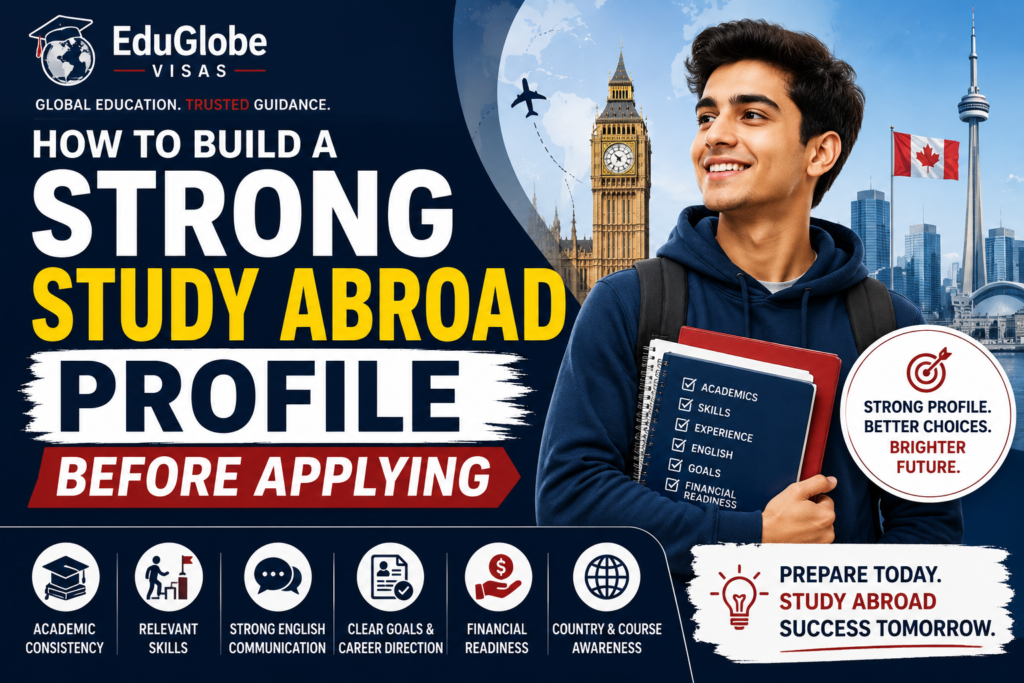
This guide explains how students can build a stronger and more realistic study abroad profile before applying to the UK, Europe, USA, or Canada.
1. Understand What “Profile” Actually Means
Many students think a profile only means grades or IELTS scores.
That is incorrect.
An international student profile is the complete picture of who you are academically, professionally, and personally.
Your profile may include:
- Academic background
- English language ability
- Work experience
- Certifications
- Volunteer work
- Research or projects
- Communication skills
- Career direction
- Financial preparedness
- Long-term goals
Universities want to understand whether a student is genuinely prepared for higher education.
2. Improve Academic Consistency
Your academic history is one of the first things universities review.
Strong profiles usually show:
- Consistent academic performance
- Subject relevance
- Genuine interest in the chosen field
- Logical progression in education
Common Mistake
Many students randomly select courses that have no connection with their previous studies.
For example:
- Engineering student applying for unrelated business programs without explanation
- Biology student suddenly shifting to IT without preparation
- Weak academic profile with no effort toward improvement
Course selection should make sense academically and professionally.
3. Build Relevant Skills Before Applying
Students who develop skills before applying often stand out more.
This does not mean you need expensive certifications.
Even simple efforts can strengthen your profile, such as:
- Online courses
- Internships
- Freelancing
- Teaching experience
- Technical skills
- Research participation
- Personal projects
Example
A student applying for:
- Data Science → can learn Python or analytics basics
- Business → can gain communication or marketing experience
- Education/PGCE → can gain classroom or tutoring experience
- IT/Cybersecurity → can build projects or certifications
Small efforts show seriousness and preparation.
4. Work on English Communication Skills
English ability is not only important for admissions.
It also affects:
- Interviews
- Classroom performance
- Presentations
- Group work
- Daily life abroad
Many students focus only on “passing IELTS” instead of actually improving communication ability.
That becomes a problem later.
Ways to Improve
Students can improve by:
- Watching English educational content
- Reading articles daily
- Speaking English regularly
- Practicing writing
- Improving listening skills
Confidence in communication matters more than memorized answers.
5. Avoid Long Unexplained Study Gaps
Study gaps are not always negative.
But unexplained gaps can create concerns.
If students have a gap period, they should try to show productive activity during that time, such as:
- Job experience
- Skill development
- Freelancing
- Courses or certifications
- Family responsibilities (where relevant)
The key is honesty and clarity.
6. Develop a Clear Career Direction
One of the strongest parts of any student profile is clarity.
Students should be able to answer:
- Why this course?
- Why this country?
- Why this university?
- How does this connect to future goals?
Weak profiles often lack direction.
Strong profiles usually show intentional planning.
Important Reality Check
International education is not only about “going abroad.”
It should support long-term academic or professional growth.
7. Build Financial Readiness Early
Financial planning is now a major part of study abroad preparation.
Students should understand:
- Tuition fees
- Living costs
- Visa-related expenses
- Emergency budgeting
- Currency fluctuations
A strong profile includes realistic financial preparation — not last-minute arrangements.
Students should also avoid relying entirely on assumptions about part-time work.
8. Learn About the Country Before Applying
Many students apply without understanding how the education system actually works.
This creates unrealistic expectations later.
Before applying, students should research:
- Academic structure
- Teaching style
- Attendance rules
- Assignment systems
- Cost of living
- Cultural expectations
- Post-study pathways
Different countries suit different students.
Correct planning requires proper understanding.
9. Stop Comparing Yourself to Social Media
Social media often shows only success highlights.
It rarely shows:
- Academic pressure
- Financial challenges
- Homesickness
- Workload stress
- Planning mistakes
Students should avoid making emotional decisions based on viral content.
Every profile is different.
The goal is not to copy someone else’s journey.
The goal is to build a profile that genuinely fits your future plans.
10. Start Planning Early
One of the biggest advantages students can have is time.
Students who plan early usually have enough time to:
- Improve academics
- Prepare financially
- Build skills
- Improve English
- Research countries properly
- Strengthen weak areas
Last-minute applications often lead to rushed decisions and avoidable mistakes.
What Makes a Strong Study Abroad Profile in 2026?
A strong profile is not about perfection.
It is about:
- Consistency
- Clarity
- Preparation
- Realistic planning
- Genuine intent
Universities and visa systems increasingly value students who are serious, informed, and academically prepared.
Final Thoughts
Building a strong study abroad profile takes time, effort, and honest self-evaluation.
Students should focus less on shortcuts and more on preparation.
Because in 2026, successful study abroad decisions are no longer based on hype.
They are based on:
- Correct planning
- Strong foundations
- Clear direction
- Long-term thinking
As EduGlobe Visas believes:
“Helping make correct decisions, not quick decisions.”
This educational and clarity-focused approach strongly aligns with EduGlobe’s authority-driven content strategy and long-form guidance ecosystem.