

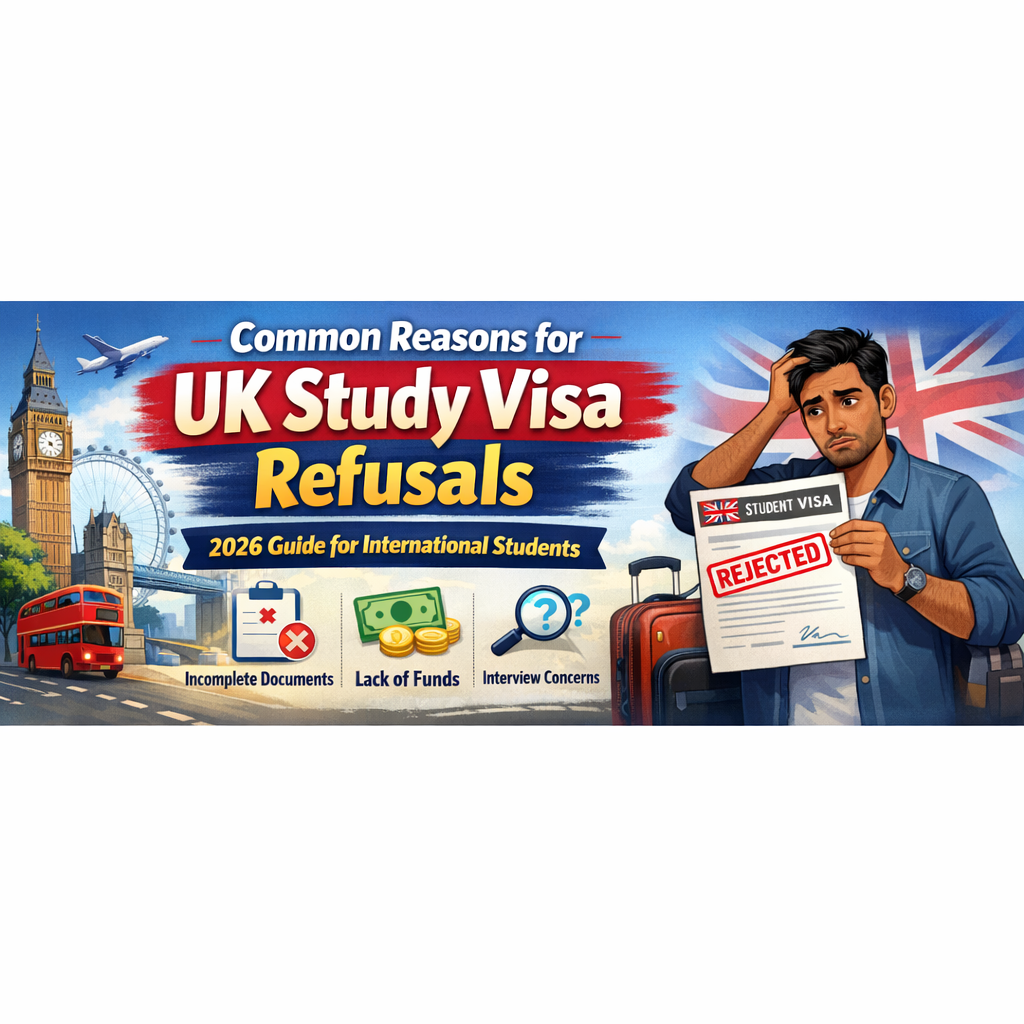
Applying for a UK student visa is a structured process, but many applications are refused due to avoidable mistakes. Understanding the common reasons for UK study visa refusals can help students prepare properly and reduce risk.
This guide explains the most frequent refusal reasons clearly and practically.
How UK Student Visa Decisions Are Made
UK student visa applications are assessed under the Student Route rules. Visa officers evaluate:
- Academic progression
- Financial credibility
- Documentation accuracy
- English language requirements
- Genuine study intent
Visa decisions are based on documentation and clarity. There are no automatic approvals.
1. Insufficient or Incorrect Financial Documentation
One of the most common reasons for UK study visa refusal is financial non-compliance.
Common financial mistakes include:
- Not maintaining required funds for the correct duration
- Submitting incomplete bank statements
- Unexplained large transactions
- Incorrect account holder details
- Funds not meeting UKVI guidelines
Financial documentation must strictly follow UKVI rules. Even small errors can result in refusal.
2. Unclear or Weak Study Intent
The UK expects genuine students with logical academic progression.
Refusals may happen if:
- The chosen course is unrelated to previous qualifications
- The personal statement lacks clarity
- Academic progression is inconsistent
- The study plan appears unrealistic
Your course choice must align with your academic and professional background.
3. Choosing an Irrelevant Course
Academic relevance is very important in UK visa decisions.
For example:
- Applying for an unrelated Master’s program
- Choosing a course that does not match prior study
- No logical explanation for subject change
Visa officers assess whether your choice makes academic sense.
4. Incomplete or Incorrect Documentation
Missing or incorrect documents can lead to refusal.
Common documentation issues:
- Expired passport
- Missing academic certificates
- Incorrect CAS information
- Mismatched personal details
- Translation errors
All documents must match exactly with the information provided in the visa application.
5. English Language Requirement Issues
English language proof must meet university and visa requirements.
Refusal risks increase when:
- IELTS score does not meet required band
- Test results are expired
- Incorrect English certificate is submitted
- Assumptions are made about waivers
Always verify English requirements before submission.
6. Credibility Concerns
In some cases, visa officers assess whether the applicant is a genuine student.
Concerns may arise if:
- Academic history is inconsistent
- Financial documents raise doubts
- Study plan lacks long-term clarity
- Information provided appears contradictory
Consistency across documents is critical.
7. Late or Rushed Applications
Applying too late increases pressure and risk.
Common issues in rushed applications:
- Incomplete documents
- Financial errors
- Poorly written statements
- Incorrect form submissions
Proper planning significantly reduces risk.
8. CAS (Confirmation of Acceptance for Studies) Issues
Your CAS must be accurate.
Refusals may occur if:
- CAS details do not match your application
- Tuition fee information is incorrect
- Conditions are not properly fulfilled
Always review CAS carefully before applying.
How to Reduce the Risk of UK Study Visa Refusal
Students can reduce refusal risk by:
- Choosing relevant academic pathways
- Preparing financial documents correctly
- Maintaining required funds properly
- Reviewing all documents carefully
- Planning early
- Ensuring logical academic progression
Preparation is the strongest protection.
What Happens If a UK Study Visa Is Refused?
If refused:
- You will receive a refusal letter explaining reasons
- You may reapply after correcting issues
- Administrative review may be possible in certain cases
Before reapplying, it is important to fully understand and fix the problem.
Frequently Asked Questions
What is the most common reason for UK student visa refusal?
Financial documentation errors and unclear academic progression are among the most common reasons.
Can I reapply after a UK visa refusal?
Yes, but only after addressing the issues mentioned in the refusal notice.
Does changing the course increase refusal risk?
If the course is irrelevant to your background, it may increase risk unless clearly justified.
Are UK study visas guaranteed?
No visa process guarantees approval. Decisions are based on documentation and eligibility.
Final Thoughts
UK study visa refusals are often preventable. Most issues arise from poor preparation, unclear academic progression, or incorrect financial documentation.
Students who:
- Plan early
- Choose relevant courses
- Maintain financial clarity
- Submit accurate documentation
have significantly stronger outcomes.
Correct preparation reduces unnecessary risk.